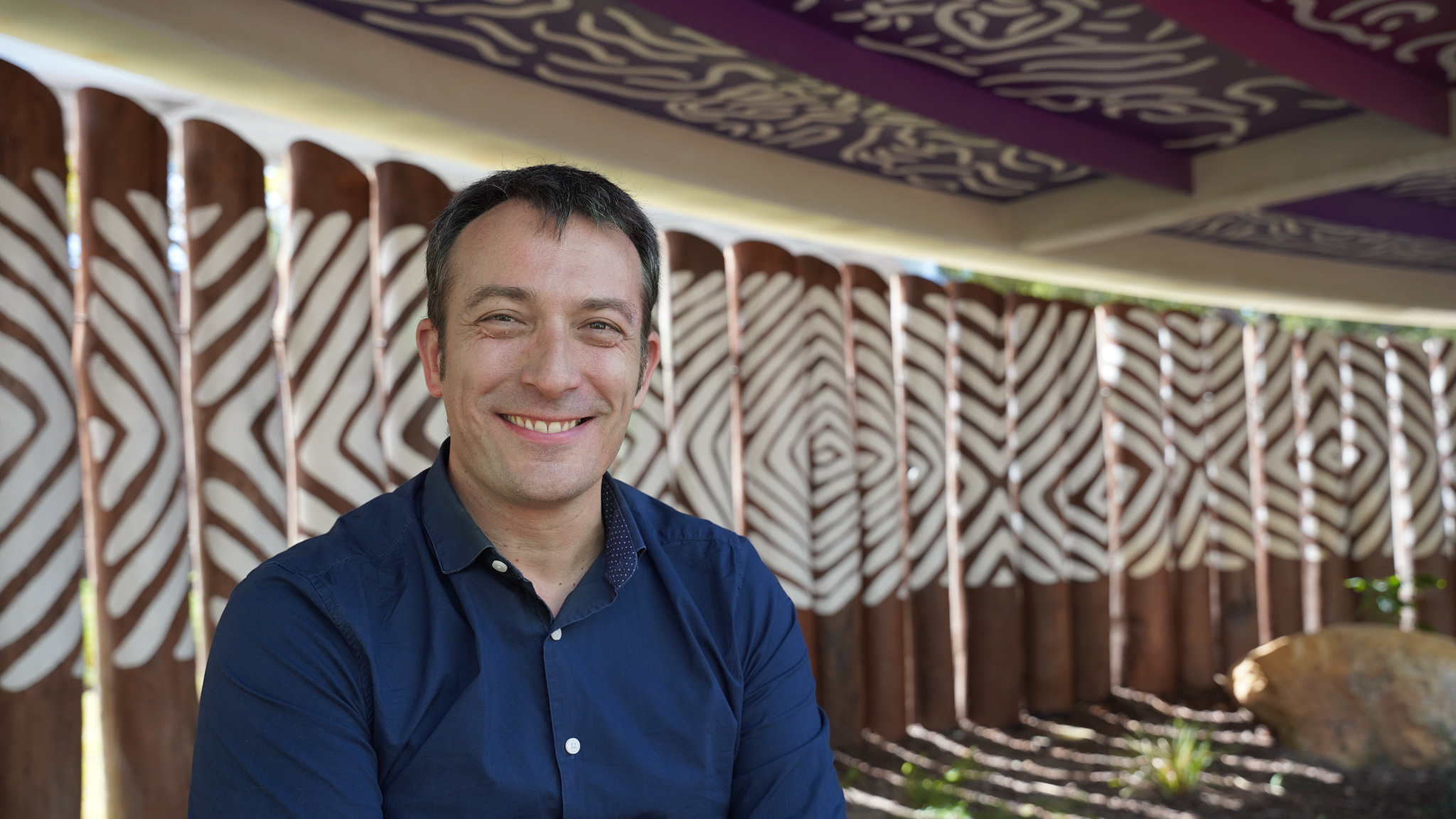
Dr Sébastien Malinge, childhood cancer researcher at The Kids Research Institute Australia, has been named as a recipient of the Stan Perron Charitable Foundation Research Fellowship, an honour recognising both his scientific excellence and deep commitment to improving the lives of children with cancer.
This prestigious grant will accelerate Dr Malinge’s groundbreaking research program, “New routes to improve outcomes for children with poor prognosis leukaemia,” focused on transforming care for children with some of the most challenging and high-risk forms of the disease.
“Leukaemia remains the most common childhood cancer in Australia, with more than 270 diagnoses each year. While survival rates for paediatric cancers have steadily improved, progress has not been equal for all children,” says Dr Malinge.
Hard-to-treat leukaemia, such as Acute Myeloid Leukaemia (AML), high-risk Acute Lymphoblastic Leukaemia and lymphoid leukaemia in children with Down syndrome, continue to have poorer outcomes and significant long-term side effects for survivors.
Dr Malinge’s work addresses these devastating cancers directly. His program brings together a powerful combination of child-specific models, state-of-the-art precision medicine and strong international and local collaborations. It is built around three key research streams, each targeting an urgent area needed to enable better outcomes.
Stream 1: Limiting toxic side effects
Currently, children with Down syndrome (DS) are three times more likely to experience treatment-related complications. Using unique age-appropriate and DS-specific leukaemia models, Dr Malinge aims to uncover why this disparity exists, and explore novel ways to reduce treatment side effects, such as testing the efficacy of novel and safer regimes, and identifying biomarkers of treatment-induced toxicity. Clinicians can utilise these biomarkers to better personalise therapy, selecting the most effective treatment option for each individual, even beyond children with DS.
Stream 2: Developing new targeted therapies
In partnership with the American Blood Cancer United (formerly known as Leukaemia and Lymphoma Society) and world-leading research centres, Dr Malinge’s team has already identified several promising drug candidates. Dr Malinge now aims to move these discoveries from the laboratory towards future clinical trials, giving children access to safer and more effective personalised treatments.
Stream 3: Integrating immunotherapy for childhood AML
AML outcomes for children are still behind other paediatric cancers. Dr Malinge is addressing this gap by developing innovative childhood AML models to explore how immunotherapies, already successful in other cancer types, could be adapted for these young patients. This pioneering work has the potential to redefine treatment for AML and other childhood cancers. This program is grounded in collaboration between scientists, clinicians, families, patient advocates and global partners.
When asked about the grant, Dr Malinge explains that “receiving the Stan Perron Charitable Foundation Research Fellowship is an incredible honour, as is the opportunity to accelerate the translation of our fundamental research into the clinic. With it, I will ensure community-informed research is at the forefront, and that lived experience shapes scientific direction and maximises real-world impact.”
This grant is not only a celebration of Dr Malinge’s achievements to date, including more than a decade of discovery in leukaemia, but also a powerful investment in the future of childhood leukaemia research. His work strengthens Western Australia’s research capacity, builds pathways for new clinical trials and brings the vision of happy, healthy kids closer to reality.
First published Tuesday 10 February 2026.
View all news articles